The Best Pillow for Neck Pain, According to a Chiropractor
This is one of the most common questions I get as a chiropractor. Having a bad pillow match can create a vicious cycle where we keep aggravating our neck at night, but also can’t get a good rest to recover and feel better. Like other chiropractors over the years I’ve come up with ideas about what pillows tend to work best and which are better to avoid. In this post I’ll share some of my ideas based on personal experiences, research on pillow types, and the experiences of my patients.
The short version is this; there is no perfect pillow that works for everyone. Just like treatments and exercise types, most things can work well but for different people at different times. The trick seems to be matching yourself and any issues you may have to the pillow type. Read more to understand why, or skip the bottom for my tips if you’re short on time and want some answers.
Strategy #1 For Choosing Your Perfect Pillow - By Pillow Type
Pillows range on the spectrum from soft and moldable (usually more budget-friendly), to more firm and supportive (usually more expensive and semi-custom). Let’s talk about each type and their pros and cons.
On the soft end we have feather and polyester pillows. These are very moldable and you can easily position them just how you want. They range from around $20-80. On the more supportive end we have foam pillows, either regular foam or contoured (to match the neck curve) pillows, and rubber/latex as the most firm or supportive. These pillows are all the rage, especially foam-type, and the marketing for them is so strong it makes you wonder why neck pain hasn’t been cured forever already. They’re more expensive, going for $100 all the way up to $300 depending on the type. In the middle somewhere are down pillows, which have more support than polyester or feather, but not as much as foam or rubber.
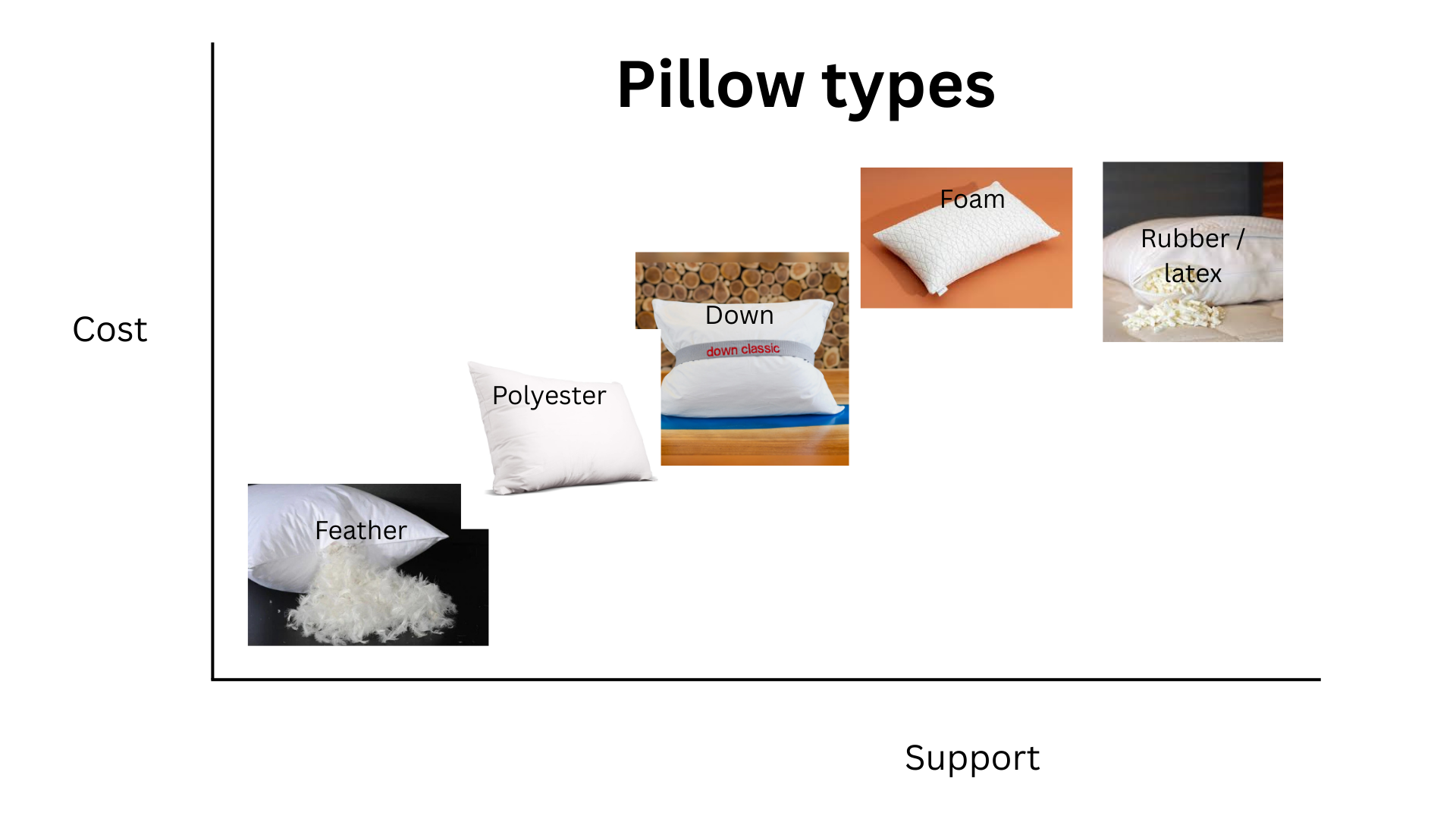
Most common pillow types: where the harder the pillow the more expensive, apparently.
To help sort through the pros and cons of each pillow type, I looked at some studies published in research journals (linked at the bottom for anyone who wants to dig a bit further).
One study looked at these 4 pillow types (except down) for side sleepers who had no recent major neck injuries within the last year. They had them try out each pillow for a week each, and compared it to their usual pillow. They tracked things like sleep quality, morning pain, etc. What they found was that for most people, “waking pain” was highest for feather pillows compared to other types, and people using the rubber/latex pillows had the most pain free days on waking (second in place was the usual pillow people were already using at home). Interestingly they also found that foam pillows did well (3rd place), but it didn’t matter whether they were contoured to support the neck curve or not - suggesting that maybe the orthopedic neck curve support isn’t as big a deal as we sometimes think.
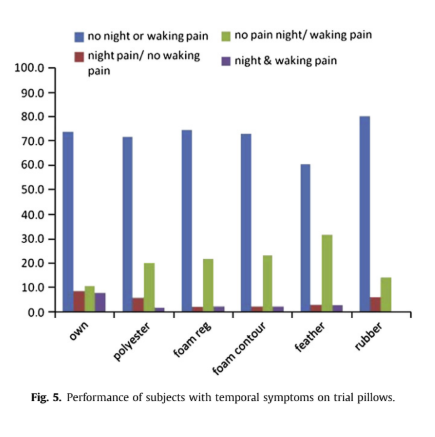
Comparing night and waking pain depending on pillow types. Note the blue bar (no pain) and green bar (waking pain, no night pain) for feather vs others. Also note how regular foam vs contoured foam is similar.
So far it seems like rubber and foam pillows take the lead for avoiding neck pain, at least for people with no recent major neck issues and just common aches and pains.
Another study looked at side sleepers too, since this is the most common position, and tried to figure out how each pillow type supports their neck position. They were trying to see two things. One: how does each pillow support the different areas of the neck. And two: does different pillow material deform the longer you lay there. They had subjects lie with each pillow for 10 minutes, and used a camera behind them to track neck position in 4 areas they marked beforehand (base of skull, top of neck, mid-low, and base of neck-upper back). They then tracked position change over the time for each pillow, and plotted the change from 0 min to 10 min.
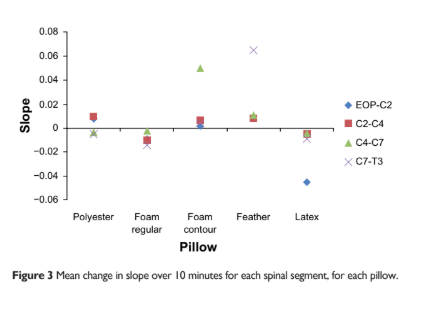
Pillow math: Looking at the position change over 10 minutes for different area of the neck and different pillows.
What they found was that no pillow type deformed more than any other. Basically it didn’t matter whether you had feather, polyester, foam, or rubber. They all held shape over 10 min (maybe not long enough?). They also found that across all pillows the part of the neck that moved the most was the top and mid-portion (C2-C4 and C4-C7). This makes sense since these are the regions where we get most of our lateral movement / side-bending in our neck.
Just like the previous study, they also found that it didn’t matter whether or not your foam pillow was contoured. Each one had the same type of support. So it seems like pillow shape doesn’t matter as much as material type. Their last conclusion was that the softer pillows supported the higher up part of the neck more (less movement over the 10 min compared to others), while the more supportive pillows supported the lower part of the neck more (more movement in the top of the neck but less at the base compared to others). Though this wasn’t consistent across soft vs hard types and so probably isn’t enough for a final conclusion on this based on this data alone.
So far we know that shape might not matter as much as material, that feather pillows are generally least recommended, and that rubber/latex is most supportive with foam in second (though maybe most supportive for the base of the neck and not the top).
Conclusion for pillow type:
If you use pillow type as your guide, a foam or rubber/latex seems best, but the shape of it doesn’t seem to matter too much (so don’t worry about paying the big bucks for the shape if you can find the same material for cheaper). If your neck isn’t too bothersome in general, then a polyester may not be so bad if you’re looking to save some money.
Strategy #2 For Choosing Your Perfect Pillow - By Level of Pain
Some other research I think is helpful is looking at pillow options for people who actually have active neck pain (makes sense, right?). There’s a few studies on this, and most of them have their special amazing pillow they wanted to try. These were usually foam contoured types, or orthopedic cervical rolls. Another one did try four types, and they looked at what people with neck pain and headaches liked best. The first study found that the foam contoured pillows outperformed what people were already using for neck pain for most, but not all participants (they didn’t compare to any other pillows or control for pillow shape). The second study actually matched pillows against each other and not what people were already using, and saw that polyester and foam did about equally as well with mixed reviews all over, but that both of these were preferred over more dense foam that felt supportive but too rigid.
Essentially these and other studies are helpful guidelines, but they are small and there’s not enough of them saying the same thing for large sweeping conclusions. They don’t have the best design and pillow research seems to be low quality at this point (for ex using your usual pillow as a control group seems to really skew the results, even though this is practical because it’s what you’d compare to in real life). It seems like at this stage we have some ideas, but have to go based off real world experience and what we know about neck pain.
Conclusion for pillow choice by pain:
What I make of the research is that your ideal pillow may differ depending on the level of pain you have, and that the worse your neck is right now the harder it is to find a pillow that works perfectly. This makes sense since when your neck is healthy you can generally get away with more than when you’re having issue. A more supportive pillow like a foam or rubber option may be best if you’re currently dealing with active neck issues. These may not be as comfy as a softer option, but they will at least give you a consistent support and be less likely to deform over night.This agrees with my clinical and personal experience working with others. Generally most people (though not everyone) does better with more support when they’re having active neck issues. I previously thought shape mattered more than I do now, but it seems like material type wins at the end of the day.
Strategy #3 For Choosing Your Perfect Pillow - By Your Anatomy
The final way we can look at a pillow is by your anatomy. The goal is to support your natural neck curve when you’re on your back (a slight healthy arch), and to keep your neck from tilting up or down too high when you’re on your side. One way to do this is possibly by pillow shape, but we’ve just learned that it might be more of an industry belief / marketing thing than a reality (at least there’s no strong proof for it working compared to controls that I could find).
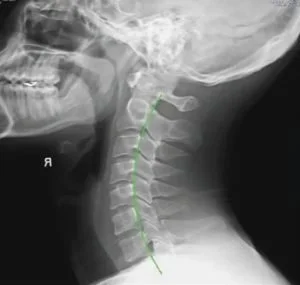
Healthy neck curve - a slight arch forward with the head not too far in front of the base
The other way is to get the right pillow size by literally measuring your neck. Some orthopedic brands do a semi-custom pillow to do this. They measure your neck height, shoulder width, neck circumference, and even take into account your sleeping position and mattress firmness to come up with a pillow “match” from a group of pre-fabricated options.
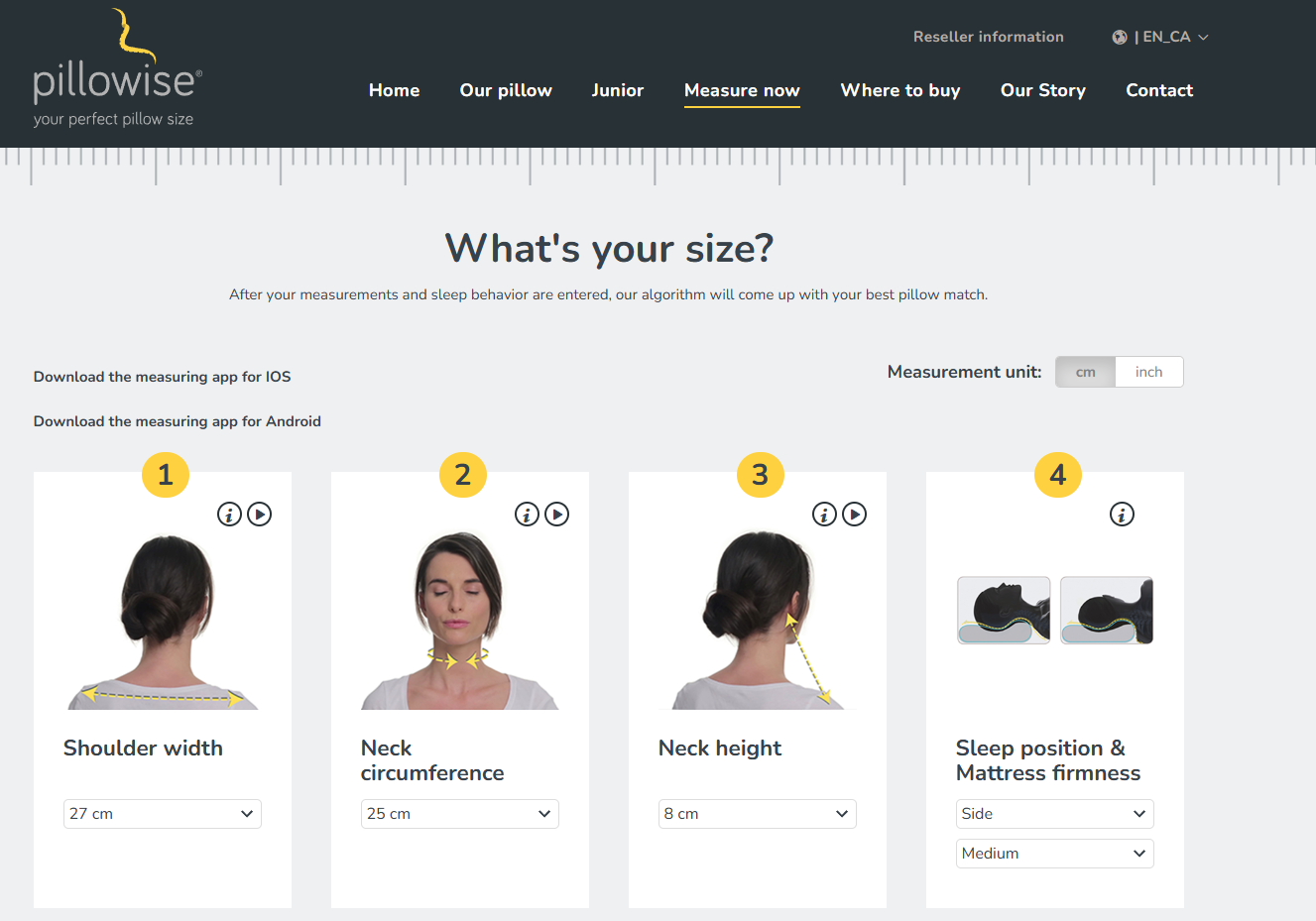
Some pillow manufacturers offer “semi-custom” pillows, where they make an effort to match your neck and shoulder dimensions to a pre-fabricated type. Full disclosure: we carry these in the clinic not because they work for everyone, but because they make this effort and offer a money-back guarantee.
One of the studies on pain used this approach with a similar pillow (foam and contoured) and found mostly good results in people with active neck pain. I personally wouldn’t die on this hill since there’s no hard research for the measurement process being necessary, but it does make anatomical sense that you would want your neck to be in neutral. Where I think this might fall totally flat is if you’re someone who sleeps in a huge variety of positions. Your pillow measurements might be oh so perfect for your back, but leave you totally unsupported on your side. Since it‘s hard to give the option of two sleeping positions in measuring, you may have to really commit to one for this approach to work.
So putting it all together, here’s my TLDR on finding your perfect pillow as a chiropractor based on research and my experience:
If you’re in active pain and dealing with an ongoing injury, tend toward a more supportive foam or rubber option. Shape may not matter as much as material type, and try to find one that at least aims to measure you for a better fit. Whether or not you do the measuring, really try hard to sleep in the one position that your pillow was fit for or that your chiropractor or physio may have suggested. Like I mentioned above you can get a bit fancy and also play with different types for supporting the top vs bottom of your neck also. Oh and stay away from feather pillows.
If you don’t have current neck issues and just want to reduce the occasional morning ache and sleep better: go for a foam or rubber if you’ve got cash to spend, or a down or polyester option if you want to be budget-friendly. Again don’t worry about the pillow shape too much, and don’t fall for that $300 perfect pillow that promises to give you the best sleep of your life every night.
Final but important point: Sometimes it’s not your pillow!
As our neck goes through various postures, movements, and potentially even sudden trauma, problems can start to accumulate in our neck tissues. Muscles can become tight, joints stiff, ligaments stretched, etc etc. If this is from a sudden trauma then it’s pretty obvious, and most people understand this may take time to heal. What’s far more common though is that these changes are slow and gradual, largely due to the postures we find ourselves in or the movements we repeat throughout the weeks and months. Because it’s slow, you may not notice any pain, yet tension and stiffness builds. Remember that pain is more like an alarm system than an exact indicator of what’s going in our body in real-time.
What I’m getting at is that in such a tight and stiff neck (hint; with desk work and phones it’s a lot of us these days!), it’s very easy to “flare up” your neck at night. Since you might wake up with pain it’s also easy to then blame your pillow. Maybe you try a new pillow, and things feel better for a while. But eventually if nothing changes the cycle repeats and off to the pillow store you go again. The point is that if your neck seems to be irritated no matter what pillow you try, or you have a history of neck issues to begin with… your best strategy may honestly be just to work with a chiropractor on fixing your neck first. Sure, we need a pillow that works at least OK. But we can’t expect to find a magic fix if we don’t address the underlying issues present.
If you feel like you’ve been back and forth between pillows, or have had ongoing neck issues then consider getting in for some treatment. Ideally we can see where you’re at and come up with a plan for what to do in-office and at home to help. For some people this might be a quick process, while for others it may require some ongoing work depending on where you’re coming from. Either way, with a healthier neck your pillow options will be way more flexible and your search for the illusory perfect pillow may be able to come to an end.
Studies referenced in this post:
Pillow use: The behavior of cervical pain, sleep quality and pillow comfort in side sleepers.