

Custom Orthotics
Orthotic Prescription Process
Dr. van de Wall’s orthotic process is outlined below. Scroll down for more details on orthotic types, cost, and booking.
Click here if you would like to learn more about how orthotics work.
1. Understanding orthotic goals & history
Pain relief, prevention, mechanical correction, or sport performance
Review of previous orthotic use
2. Biomechanical assessment
Static foot posture (arch height, heel valgus, big toe position, etc.)
Gait assessment
Ankle and foot flexibility assessment
Ankle and foot strength assessment
3. Orthotic Fitting & Prescription
Casting of the foot and arch
Review of orthotic types and recommended prescription based on goals and assessment (for ex. shell thickness recommendation, heel position correction for heel collapse, heel cushioning for plantar fasciitis, toe arthritis off-loading supports, etc.).
4. Orthotic Ordering
Deposit paid on day of casting and ordering.
Orthotics arrive in 2-3 weeks (1 week rush order available on request), with remaining payment due on pick up.
On pickup you will receive your orthotics plus all relevant information to submit to your extended health for reimbursement.
Orthotic Types
Each orthotic is type is chosen to match your lifestyle, then customized further to address your specific foot function needs.
Athletic Orthotics
These orthotics are for active individuals and are designed to offer arch correction while helping to improve shock absorption. Sport-specific orthotics can also be designed improve to sport performance by optimizing foot and ankle biomechanics.
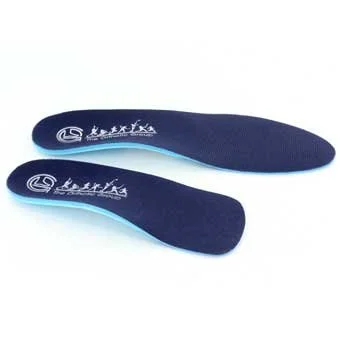
SportFlex
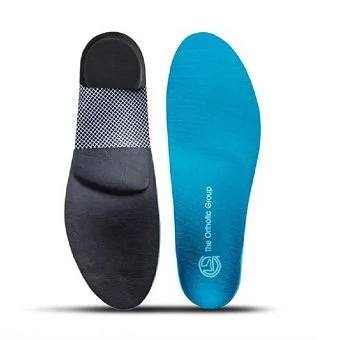
Performance Sport
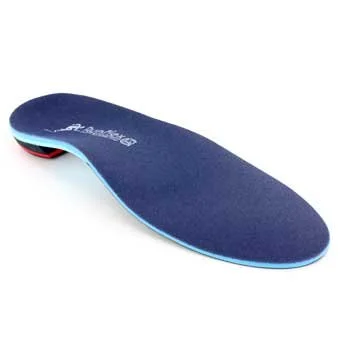
RunFlex
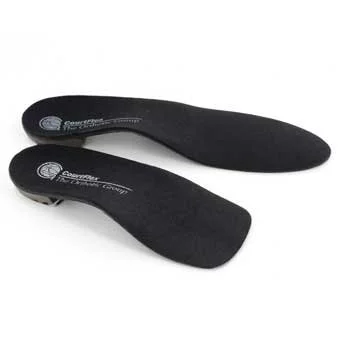
CourtFlex
Occupational Orthotics
These orthotics are designed to fit specific types of shoes, and to offer support for extended periods of time without being too rigid or uncomfortable. The most commonly used occupational orthotics are for steel-toed work boots (safetyflex) and narrow dress shoes (dressflex).
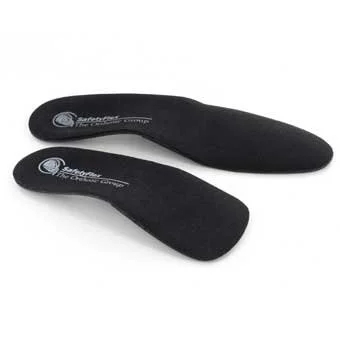
SafetyFlex
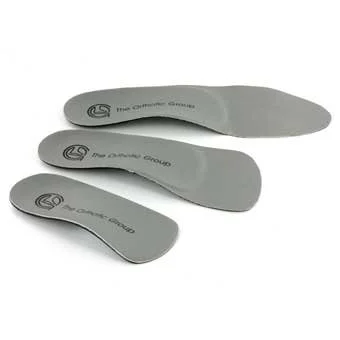
DressFlex
General Orthotics
General orthotics include a wide variety of orthotic options for daily life and different types of footwear. They range from high support options for those with more severe foot function problems, to more casual and low-profile options for those just looking for extra comfort and prevention.
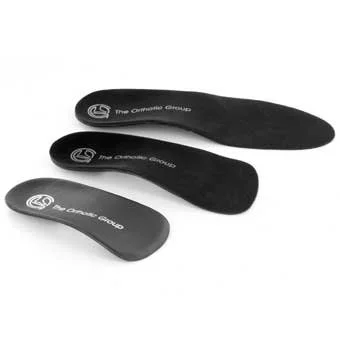
SuperFlex
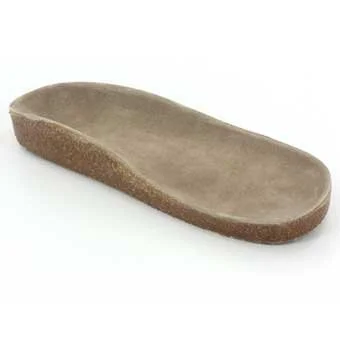
SandalFlex
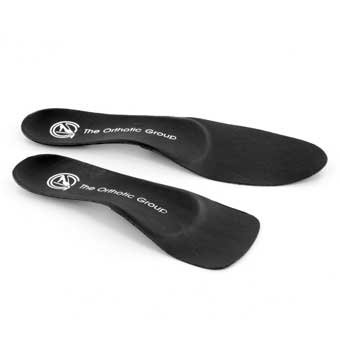
FashionFlex
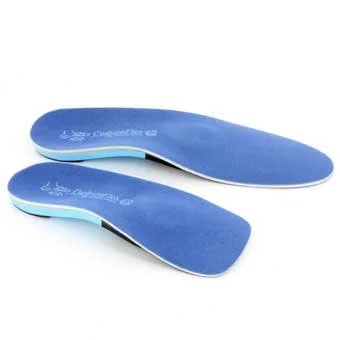
CushionFlex
Condition-Specific Orthotics
Each of the orthotic types above can be used to create an orthotic for specific condition or pain problem (for ex. plantar fasciitis, knee arthritis). The orthotic type chosen determines the material and orthotic shape, and the orthotic prescription includes specific modifications and add-ons based on the condition at hand. Below are examples of commonly used condition-specific orthotics, though there are many more options.
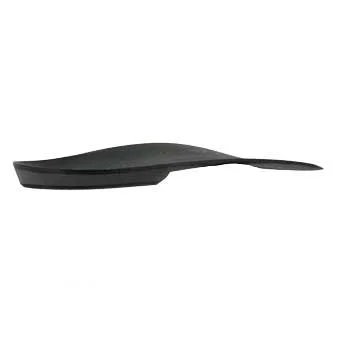
Orthotic with extrinsic rearfoot post for knee arthritis - the post is angled to offload a certain part of the knee (either inner or outer knee compartment).
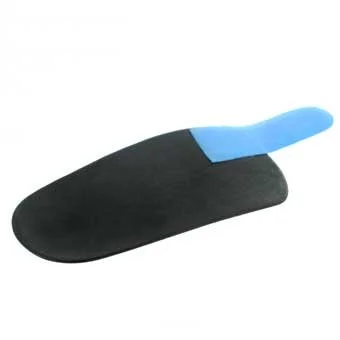
Orthotic with morton’s extension add-on for big toe arthritis - the orthotic shell is extended to off-load and slightly immobilize the big toe to reduce pain from arthritis.
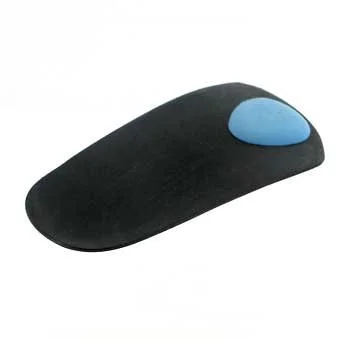
Orthotic with metatarsal pad add-on for forefoot pain - for ex. morton’s neuroma, metatarsalgia, hammer toes, hallux valgus.
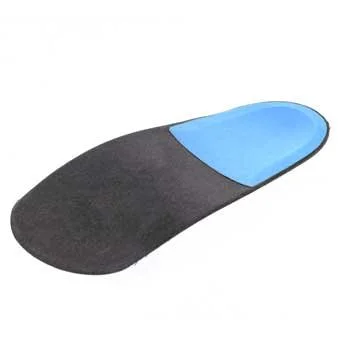
Orthotic with heel cushion add-on for heel pain - for ex. plantar fasciitis, baxter’s neuropathy, heel spurs.
Custom Orthotics Cost & Reimbursement
Total Cost of Orthotics: $450
$200 deposit on casting
Remaining $250 on orthotic pick up
Includes assessment & prescription, casting, manufacturing, and shipping.

Understanding Orthotic Coverage
Most extended health plans cover the full or partial cost of orthotics. Plans range from $200-$500+ with a new pair covered annually to every 2 years or more.
Unlike treatment services, orthotics cannot be direct billed (payment must be made up front and you are reimbursed by your insurance afterward).
In order to check your orthotic coverage you must reach out to your extended health provider directly by phone, email, or app (a clinic cannot access that information for you).
Getting Your Orthotics Covered
In order to get reimbursed, you must find out what type of prescription is needed.
All extended health plans view chiropractors as professionals trained to dispense orthotics, but only some will fully reimburse you with a chiropractic prescription alone.
If your plan does not say chiropractic prescription, you must visit a family doctor and get an orthotic prescription (ideally before your orthotic casting visit).
If you choose to do orthotics with Dr. van de Wall, you will receive all relevant insurance papers on orthotic pick up (this includes a chiropractic biomechanical prescription and orthotic proof of manufacturing), but it is your responsibility to make sure you have the right type of prescription on submitting for reimbursement.
Booking An Orthotic Appointment
1. Review your orthotic coverage checklist:
Coverage amount (total cost is $450)
How often can you get a new pair (ie. if you got a pair of orthotics recently, do you have to wait for coverage to reset)?
Type of prescription needed (medical vs chiropractic)
2. Book an orthotic assessment & casting visit:
If you are an existing patient of Dr. van de Walls, orthotic casting can be done as part of a regular chiropractic visit as your foot function assessment has likely already been done on your first visit.
If you are not already a patient of Dr. van de Wall and would like to be, book an initial chiropractic visit for assessment, treatment, and orthotics.
If you are only interested in orthotics, contact Optimum Sport & Health Centre to set up a casting appointment. Note that this type of appointment is not bookable online. Before booking this type of appointment, please make sure you have reviewed your orthotic coverage checklist ahead of time.
For orthotic casting only, call Optimum Sport at 604-703-6470, or email at info@optimumclinic.ca